
Strength Training for Older Adults: Build Strength, Move Better, Live Stronger Getting older doesn’t mean you have to slow down. In fact, staying strong can make everyday life feel easier—from getting out of a chair and climbing stairs to carrying groceries, playing with the grandkids, or simply moving around with greater confidence. Strength training for older adults is more than lifting weights. It is a practical way to support muscle strength, mobility, balance and independence as you age. Why Strength Matters More as You Age As we get older, changes in muscle mass, strength, bone health and mobility can make everyday physical tasks more challenging. Snap Fitness highlights strength training as one way older adults can help maintain muscle, mobility and physical function. The CDC recommends that adults aged 65 and older include muscle-strengthening activities at least two days each week, along with aerobic and balance activities. That doesn’t mean every workout needs to be intense. The goal is to build a consistent routine that matches your current ability—and gradually develop strength and confidence over time. The Benefits of Strength Training for Older Adults 1. Support Muscle Strength Muscle strength plays a role in almost everything you do. Standing up, walking, lifting objects and climbing stairs all require your muscles to work. Regular muscle-strengthening activity can help older adults maintain or build strength and support everyday physical function. Think of strength training as practicing for real life. The stronger your body becomes, the more prepared you may be for the physical demands of daily activities. 2. Improve Balance and Stability Balance becomes increasingly important with age. Strengthening the muscles of the legs, hips and core can contribute to better physical function and balance. The CDC recommends that older adults include balance activities as part of their weekly physical activity. Simple movements such as supported squats, calf raises and controlled lower-body exercises can be incorporated into a broader fitness routine. 3. Make Everyday Movement Easier Fitness isn’t only about what happens inside a gym. It shows up when you carry shopping bags, get up from a sofa, walk through a park or climb a flight of stairs. Regular physical activity can help older adults maintain the ability to perform everyday activities and live independently for longer. That’s one of the biggest reasons to make strength training part of an active lifestyle: you are training for the life you want to keep living. 4. Support Bone Health and Healthy Aging Healthy aging involves more than maintaining muscle. Physical activity can also support bone health, while a varied exercise routine can help maintain physical function. Strength training can therefore be one piece of a broader approach to staying active as you age. 5 Beginner-Friendly Strength Exercises for Older Adults You don’t need a complicated workout to begin. Depending on your fitness level and individual circumstances, several basic movements can form the foundation of a strength-training routine. Chair Squats Why: Lower-body strength and functional movement. Stand in front of a sturdy chair with your feet approximately hip-width apart. Slowly bend your knees and hips to lower yourself toward the chair, then stand back up with control. A chair can provide additional support and make the movement easier to manage. Standing Calf Raises Why: Lower-leg strength and stability. Stand tall while holding a stable surface if needed. Slowly raise your heels, pause briefly, and lower them back down with control. Snap Fitness includes standing calf raises among its suggested exercises for older adults. Resistance-Band Exercises Why: Adjustable resistance and accessible strength training. Resistance bands can be useful for beginners because they are portable and available in different resistance levels. Snap Fitness recommends starting with manageable resistance and progressing gradually. Seated Rows Why: Upper-body and back strength. A seated rowing movement can work the muscles of the upper body. In a gym setting, a cable machine may be used, with attention to controlled movement and good posture. Supported Lunges Why: Lower-body strength and coordination. A stationary or supported lunge can challenge the legs while allowing you to focus on controlled movement. If balance is a concern, use appropriate support rather than forcing the movement. Important: Exercise selection, resistance and technique should be adapted to your abilities and health circumstances. If you’re new to exercise or have a health condition, speak with a qualified healthcare professional before beginning a new exercise program. How to Start Strength Training Safely Starting doesn’t have to mean doing more. It means doing what you can consistently and with control. Here are a few simple principles: Start light. Choose a resistance level that allows you to focus on technique. Prioritize form. Controlled repetitions are more useful than rushing through a movement. Use support when necessary. A sturdy chair, countertop or appropriate gym equipment can provide stability during standing exercises. Progress gradually. As your strength and confidence improve, resistance, repetitions or sets can be increased progressively rather than changed dramatically all at once. Make recovery part of the plan. Your routine should allow appropriate recovery between strength-training sessions. The CDC notes that older adults should be physically active according to their abilities and conditions, and that some physical activity is better than none. A Simple Weekly Approach For adults 65 and older, current CDC guidance calls for: Your routine doesn’t have to look exactly like someone else’s. A brisk walk, two strength sessions and regular balance-focused activities can form part of a weekly plan, depending on your abilities and circumstances. Stronger Isn’t Just a Fitness Goal—It’s a Lifestyle Goal Aging is inevitable. Losing the ability to do the things you enjoy doesn’t have to be the goal. Strength training for older adults can help you stay connected to the activities that make everyday life meaningful. It can support muscle strength, physical function, balance and independence as part of an overall active lifestyle. You don’t need to become a competitive weightlifter. You simply need to start where you are, choose movements appropriate for you, and build consistency. Ready to make strength part of
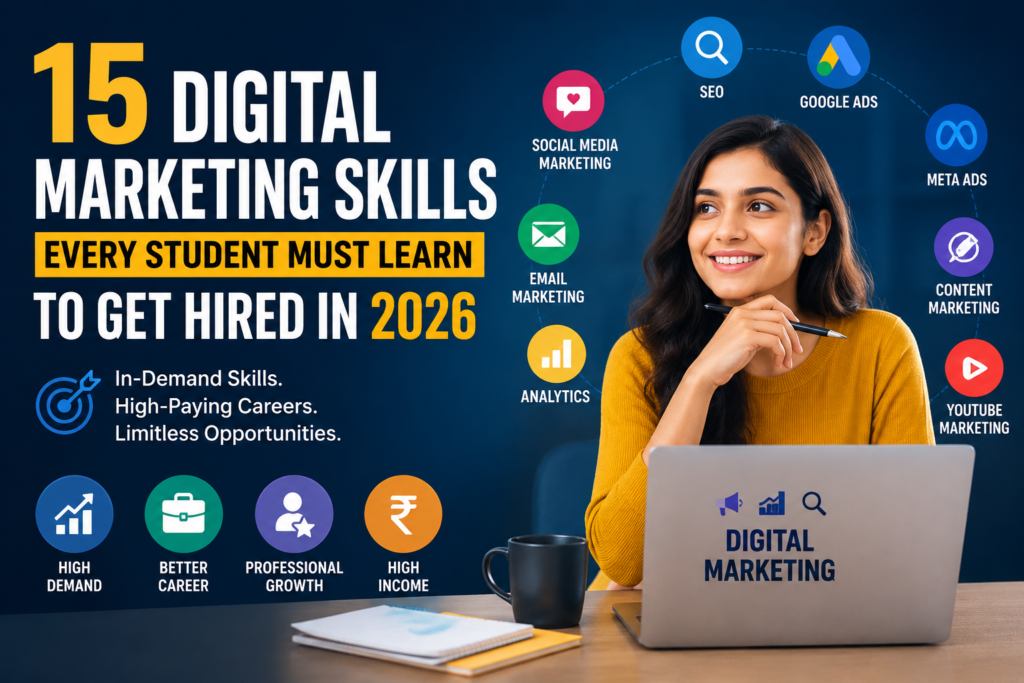
The digital marketing industry is evolving faster than ever before. Businesses of every size—from startups to global brands—are investing heavily in digital channels to reach their customers. As a result, the demand for skilled digital marketers continues to grow, creating exciting career opportunities for students and professionals alike. However, today’s employers are looking beyond certifications. They want candidates who can apply their knowledge to real-world marketing challenges, use modern tools, and deliver measurable business results. If you’re planning to build a successful digital marketing career in 2026, these are the 15 essential digital marketing skills you should focus on mastering. Why Digital Marketing Skills Matter in 2026 Digital marketing is no longer limited to posting on social media or running advertisements. It now combines creativity, analytics, artificial intelligence, automation, and customer psychology. Whether you’re aiming to become a Digital Marketing Executive, SEO Specialist, Performance Marketer, Content Strategist, or Freelancer, developing the right skills will help you stand out in a competitive job market. Let’s explore the skills that employers value the most. 1. Search Engine Optimization (SEO) SEO remains one of the most valuable digital marketing skills. It helps businesses improve their visibility on search engines like Google, driving consistent organic traffic without relying solely on paid advertising. Key areas to learn include: Companies that publish optimized content consistently can attract qualified leads for months or even years after publication. 2. Google Ads (PPC Advertising) Google Ads allows businesses to reach customers who are actively searching for products or services. Students should understand: Performance marketing continues to be one of the highest-paying areas within digital marketing. 3. Social Media Marketing Every modern business needs a strong presence on platforms such as Instagram, Facebook, LinkedIn, YouTube, and X. Essential skills include: Knowing how each platform serves different audiences will help you create more effective campaigns. 4. Meta Ads (Facebook & Instagram Advertising) Paid social advertising is an important skill for businesses looking to generate leads and sales. Learn how to: Understanding customer behavior is just as important as understanding the advertising platform itself. 5. Content Marketing High-quality content builds trust, educates audiences, and supports SEO efforts. Content marketers should know how to create: The goal is to solve problems for readers while naturally guiding them toward a product or service. 6. AI-Powered Marketing Artificial intelligence has become an essential part of modern marketing workflows. Marketers now use AI to: Learning how to work effectively with AI tools can save time while allowing marketers to focus on strategy and creativity. 7. Email Marketing Email marketing remains one of the highest-return digital marketing channels because it helps businesses build long-term customer relationships. Important concepts include: A well-planned email campaign can nurture leads and increase customer retention. 8. Google Analytics Marketing decisions should always be based on data rather than assumptions. Google Analytics helps marketers understand: Employers value professionals who can interpret data and make informed recommendations. 9. Content Writing & Copywriting Strong writing skills are essential for creating persuasive advertisements, engaging blogs, compelling landing pages, and effective email campaigns. Good copywriting focuses on: Excellent communication often separates average marketers from exceptional ones. 10. Marketing Automation Businesses increasingly rely on automation to improve efficiency. Popular automation tasks include: Learning automation platforms can significantly increase your value as a digital marketer. 11. WordPress Website Management A digital marketer doesn’t need to become a web developer, but understanding WordPress is highly beneficial. Students should know how to: These practical skills are useful in both agency and in-house roles. 12. Video Marketing Video has become one of the most engaging content formats across digital platforms. Key areas include: Businesses increasingly prioritize marketers who can plan and optimize video campaigns. 13. Marketing Data Analysis Successful marketers understand how to evaluate campaign performance. Important metrics include: Data-driven decision-making leads to better campaign results and stronger business outcomes. 14. Personal Branding Recruiters often search for candidates online before scheduling interviews. Building a professional online presence through platforms like LinkedIn, a personal website, or a portfolio demonstrates credibility and showcases your expertise. Students who consistently share insights, projects, and learning experiences can stand out from other applicants. 15. Communication & Problem-Solving Technical knowledge alone isn’t enough. Employers also value professionals who can: These soft skills enhance your ability to succeed in client-facing and leadership roles. How to Start Learning These Skills Developing digital marketing expertise doesn’t happen overnight. Begin by building a strong foundation in SEO, content marketing, and social media. Then expand into Google Ads, analytics, AI-powered marketing, and automation. Most importantly, apply what you learn through personal projects, internships, freelance work, or mock campaigns. Practical experience is one of the strongest indicators of job readiness. Final Thoughts Digital marketing continues to offer exciting career opportunities for individuals who are willing to learn and adapt. By mastering these 15 essential skills, you’ll be better prepared to meet employer expectations, contribute to business growth, and build a rewarding career in one of the world’s fastest-growing industries. Remember, the goal isn’t to become an expert in everything at once. Start with the fundamentals, practice consistently, and keep updating your knowledge as the industry evolves. Continuous learning is the key to long-term success in digital marketing. Frequently Asked Questions (FAQs) Which digital marketing skill should beginners learn first? Start with SEO and content marketing. They provide a solid foundation for understanding how people discover information online and how businesses attract organic traffic. Is AI replacing digital marketers? No. AI is changing how marketers work by automating repetitive tasks, but strategy, creativity, communication, and decision-making remain human strengths. Can I learn digital marketing without a degree? Yes. Many successful digital marketers have built their careers through online learning, certifications, hands-on projects, and continuous practice. How long does it take to learn digital marketing? The basics can be learned in a few months with consistent effort, but becoming a well-rounded marketer requires ongoing learning and real-world experience. Call to Action Ready to build a successful career in digital marketing? Focus on learning these in-demand
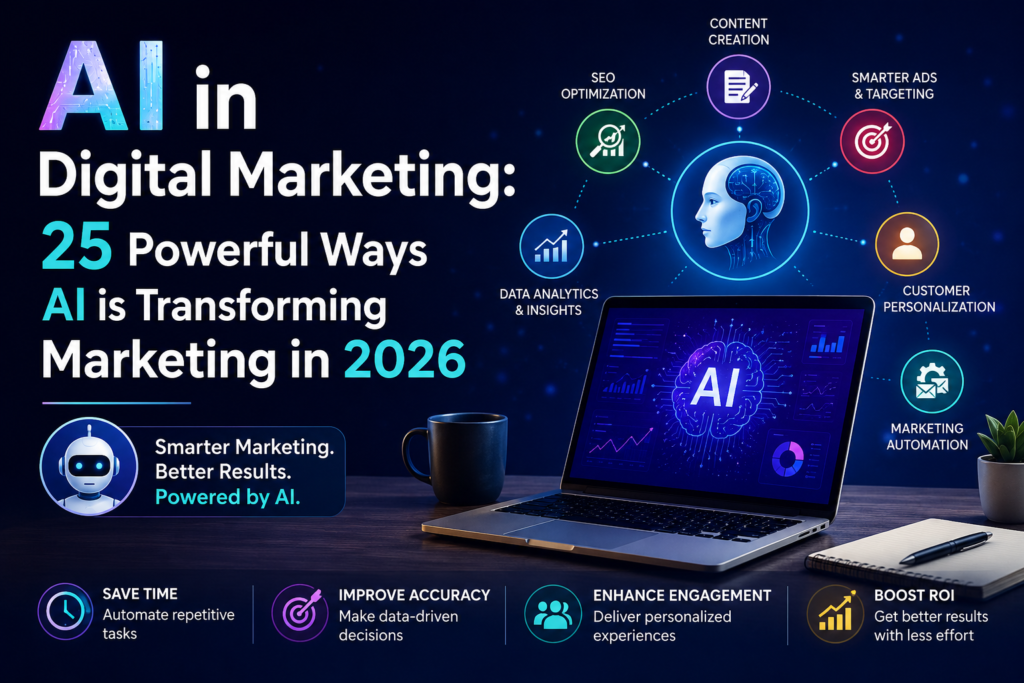
Artificial Intelligence (AI) is no longer a futuristic concept—it’s a powerful tool that’s reshaping how businesses market their products and services. Whether you’re a student exploring digital marketing, a freelancer managing multiple clients, or a business owner looking to grow online, understanding AI in Digital Marketing has become essential. From generating content in minutes to optimizing advertising campaigns and predicting customer behavior, AI helps marketers work smarter, save time, and achieve better results. In this guide, we’ll explore 25 powerful ways AI is transforming digital marketing in 2026, along with practical examples you can apply to your own marketing efforts. What is AI in Digital Marketing? AI in Digital Marketing refers to the use of artificial intelligence technologies, such as machine learning, natural language processing, and predictive analytics, to automate, optimize, and improve marketing activities. Instead of relying solely on manual effort, AI analyzes vast amounts of data, identifies patterns, and recommends or performs actions that improve campaign performance. In simple terms, AI acts like a smart marketing assistant that helps you make faster and more informed decisions. Why AI is Becoming Essential for Marketers Digital marketing has become increasingly competitive. Consumers expect personalized experiences, quick responses, and relevant content. At the same time, marketers are expected to deliver better results while managing multiple channels. AI helps bridge this gap by enabling marketers to: Rather than replacing marketers, AI empowers them to focus on strategy, creativity, and business growth. 25 Powerful Ways AI is Transforming Digital Marketing 1. AI Content Creation AI assists marketers in generating blog posts, product descriptions, email campaigns, ad copy, and social media captions, helping reduce content creation time while maintaining quality. 2. AI-Powered Keyword Research Modern AI tools identify high-volume, low-competition keywords, analyze search intent, and uncover long-tail keyword opportunities that improve SEO performance. 3. Smarter SEO Optimization AI helps optimize titles, meta descriptions, headings, internal linking, and content structure while identifying technical SEO improvements. 4. Personalized Customer Experiences AI analyzes user behavior and displays personalized recommendations, offers, and content based on browsing history and preferences. 5. Intelligent Chatbots AI chatbots provide instant customer support, answer frequently asked questions, qualify leads, and remain available 24/7. 6. Predictive Analytics AI predicts future customer behavior by analyzing historical data, allowing marketers to make proactive decisions. 7. AI Email Marketing AI determines the best sending time, personalizes subject lines, segments audiences, and improves email open and click-through rates. 8. Smarter Google Ads Campaigns AI optimizes bidding strategies, audience targeting, ad placements, and conversion tracking to maximize advertising performance. 9. Better Social Media Marketing AI suggests optimal posting schedules, generates engaging captions, analyzes audience engagement, and identifies trending topics. 10. Customer Segmentation AI groups customers based on demographics, interests, purchase behavior, and engagement, making campaigns more relevant. 11. Voice Search Optimization As voice assistants become more common, AI helps marketers optimize content for conversational search queries. 12. AI Video Creation AI tools simplify video production by generating scripts, subtitles, voiceovers, and animations, making professional videos more accessible. 13. Image Generation AI creates custom visuals, marketing creatives, banners, and social media graphics without requiring advanced design skills. 14. Marketing Automation AI automates repetitive tasks such as email sequences, lead nurturing, CRM updates, and customer follow-ups. 15. Lead Scoring AI evaluates leads based on behavior and engagement, helping sales teams prioritize prospects most likely to convert. 16. Competitor Analysis AI monitors competitors’ content strategies, keyword rankings, advertising activities, and market positioning. 17. Sentiment Analysis AI analyzes online reviews, comments, and social media conversations to understand public opinion about a brand. 18. Dynamic Pricing E-commerce businesses use AI to adjust prices based on market demand, competitor pricing, and customer behavior. 19. AI-Powered Recommendation Engines Streaming platforms, online stores, and marketplaces use AI to recommend products and content users are most likely to engage with. 20. Improved Customer Retention AI identifies customers at risk of leaving and recommends personalized retention strategies. 21. Better Landing Page Optimization AI evaluates visitor behavior and recommends layout improvements that increase conversions. 22. AI for Copywriting Marketers can quickly generate headlines, calls-to-action, product descriptions, and advertising copy using AI. 23. Fraud Detection AI detects fraudulent clicks, fake leads, and suspicious advertising activities, helping businesses protect their marketing budgets. 24. Marketing Performance Reporting AI automatically creates dashboards, summarizes campaign performance, and highlights actionable insights. 25. Faster Decision Making By processing large volumes of marketing data instantly, AI enables businesses to make quicker and more informed strategic decisions. Real-World Example Imagine you own an online furniture store. Without AI, you would manually: With AI, much of this process becomes faster and more efficient. AI can suggest keywords, draft product descriptions, create ad copy, recommend audience segments, answer customer questions through chatbots, and generate performance reports. This allows you to spend more time refining your strategy and improving customer experience. Benefits of AI in Digital Marketing Businesses that effectively use AI can experience several advantages: Challenges of Using AI While AI offers significant benefits, it also comes with challenges. Some common considerations include: The most successful marketers combine AI’s efficiency with human creativity, empathy, and strategic thinking. The Future of AI in Digital Marketing AI will continue to evolve rapidly over the coming years. We can expect even smarter marketing automation, hyper-personalized customer experiences, advanced predictive analytics, AI-powered search optimization, and deeper integration across digital marketing platforms. However, one thing will remain constant: businesses will still need skilled digital marketers who understand strategy, audience psychology, branding, and performance analysis. AI is a powerful assistant—but it still needs knowledgeable professionals to guide it. Final Thoughts AI is transforming every aspect of digital marketing, from SEO and content creation to paid advertising and customer engagement. Marketers who embrace AI today will be better equipped to deliver stronger results, work more efficiently, and stay ahead in an increasingly competitive landscape. The key is not to fear AI but to learn how to use it effectively. By combining AI-powered tools with strong marketing fundamentals, you can create campaigns that are smarter, faster, and more
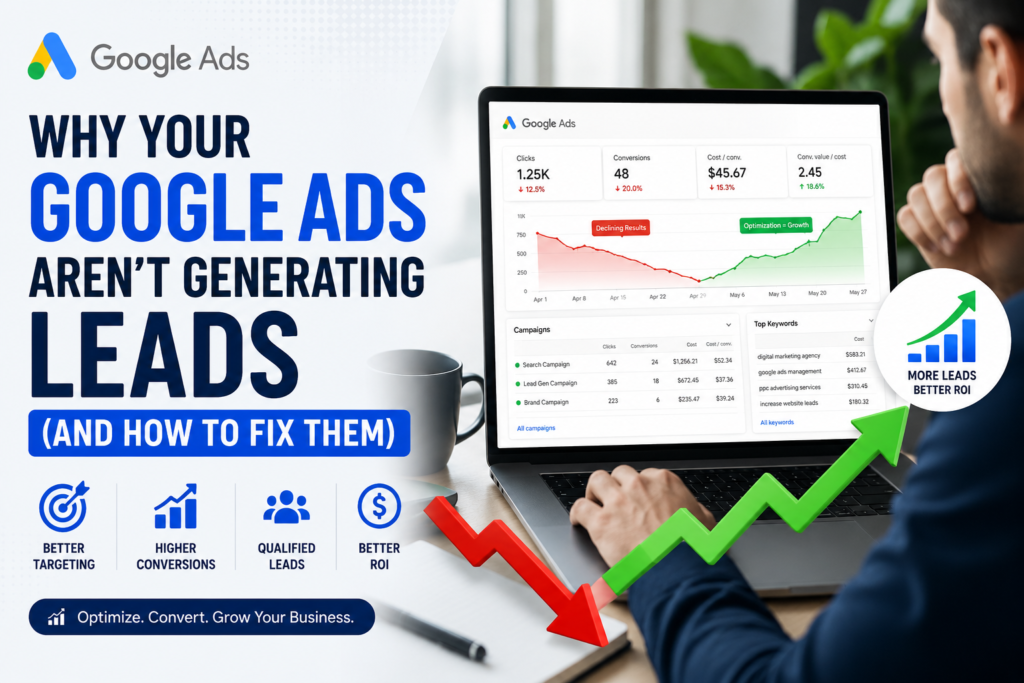
The Complete Google Ads Optimization Guide for Better ROI in 2026 Google Ads remains one of the most powerful digital marketing platforms available today. Businesses can reach customers exactly when they’re searching for products or services, generate qualified leads, and drive measurable revenue. Yet there’s a frustrating reality many business owners face: They’re spending money on Google Ads every month but seeing very few leads, poor conversions, and disappointing ROI. If that sounds familiar, you’re not alone. The good news is that most Google Ads failures aren’t caused by the platform itself. Instead, they’re usually the result of a few common mistakes that can be identified and fixed. In this guide, we’ll explore the biggest reasons why Google Ads campaigns fail and the practical steps you can take to improve your performance, reduce wasted ad spend, and generate more qualified leads. Why Google Ads Performance Matters Before diving into the mistakes, it’s important to understand what makes a successful Google Ads campaign. A high-performing campaign should: If you’re not seeing these results, one or more areas of your campaign likely need optimization. 1. You’re Targeting the Wrong Keywords Keyword targeting is the foundation of every Google Ads campaign. Many advertisers make the mistake of targeting broad keywords because they believe more traffic means more leads. Unfortunately, that’s not how it works. Example: Imagine you own a digital marketing agency. Targeting a keyword like: “marketing” is extremely broad. However, targeting: “digital marketing agency in Bangalore” or “Google Ads consultant near me” is much more specific and attracts users with buying intent. How to Fix It Primary Keywords 2. You’re Ignoring Negative Keywords in Google Ads One of the biggest causes of wasted ad spend is failing to use negative keywords. Without negative keywords, Google may show your ads for irrelevant searches. Example If you’re selling premium digital marketing services, you probably don’t want traffic from searches like: These clicks cost money but rarely convert. How to Fix Google Ads errors Create a negative keyword list containing: Review your Search Terms Report every week and continuously add new negative keywords. This simple habit can dramatically improve Google Ads ROI. 3. Your Ad Copy Isn’t Convincing Even if you’re targeting the right keywords, poor ad copy can destroy your click-through rate. Your ads must instantly answer one question: “Why should someone choose you instead of your competitors?” Weak Ad Example Best Digital Marketing Agency Better Ad Example Generate More Leads with Google AdsCertified Experts | Free Consultation | Proven Results Notice the difference? The second ad clearly communicates value and encourages action. How to Fix It Include: Examples of effective CTAs: 4. Your Landing Page Is Killing Conversions Many businesses focus entirely on ads and forget about the landing page experience. Even the best campaign will fail if visitors land on a confusing or slow website. Common Landing Page Mistakes in Google Ads How to Fix It A high-converting landing page should include: Pro Tip Aim for a page load speed under 3 seconds. Every additional second can reduce conversion rates significantly. 5. You’re Not Tracking Conversions Properly If conversion tracking isn’t configured correctly, you’re essentially driving blind. Many businesses optimize campaigns based on clicks instead of actual business results. Important Conversions to Track How to Fix It Set up: Tracking allows you to understand exactly which campaigns, keywords, and ads generate revenue. 6. You’re Using the Wrong Bidding Strategy Google’s bidding options have evolved significantly over the years. Many advertisers still rely on manual bidding when automated bidding may produce better results. Popular Smart Bidding Strategies How to Fix It Choose a bidding strategy based on your objective: If your goal is lead generation:Use Maximize Conversions. If your goal is revenue growth:Use Target ROAS. Always give Google’s algorithm sufficient conversion data before making major adjustments. 7. You’re Not Optimizing Campaigns Regularly Google Ads is not a “set it and forget it” platform. Markets change. Competitors change. Search behavior changes. Campaigns require ongoing optimization. Weekly Optimization Checklist ✓ Review keyword performance ✓ Add negative keywords ✓ Analyze search terms ✓ Monitor conversion rates ✓ Adjust bids ✓ Test new ad copy ✓ Improve landing pages ✓ Review audience targeting Consistent optimization often separates profitable campaigns from unprofitable ones. Bonus Tip: Focus on Leads, Not Clicks One of the most common mistakes businesses make is celebrating clicks. Clicks don’t pay the bills. Leads and customers do. Instead of asking: “How many clicks did we get?” Ask: “How many qualified leads did we generate?” That’s the metric that truly matters. Final Thoughts Google Ads can be one of the most profitable marketing channels for your business when managed correctly. If your campaigns aren’t generating leads, don’t immediately assume Google Ads doesn’t work. More often than not, the problem lies in targeting, tracking, ad copy, landing pages, or campaign optimization. By fixing these common issues, you can reduce wasted ad spend, improve conversion rates, and generate significantly better results from your advertising budget. Remember: Successful Google Ads campaigns aren’t built overnight. They require continuous testing, optimization, and refinement. Start implementing these strategies today, and you’ll be well on your way to turning your Google Ads campaigns into a predictable lead-generation machine.